I made another journey to the Lilly Library October 6-7, 2016 to review findings from this past year's notes. I have found that many Drs. in Philadelphia were at attendance when the balloon took off into the morning skies.
Charles Cist and his descendants are the focus of research from Pewabic Writing. The research findings include how Charles Cist changed his name before he arrived to the British Colonies from St. Petersburg, Russia. There is an additional viewpoint that illustrates a common theme of liberty, freedom, and justice. American and global ideals that span from the American Revolution to modern present day society are explored. Pewabic Writing invites you to comment and join to press follow button.
Friday, September 25, 2026
Lilly Rare Book Department at the University of Indiana, Blooming ton, IN
I made another journey to the Lilly Library October 6-7, 2016 to review findings from this past year's notes. I have found that many Drs. in Philadelphia were at attendance when the balloon took off into the morning skies.
Wednesday, July 29, 2026
The Hermitage: President Andrew Jackson's estate- Nashville, Tennessee (July 28, 2026)
There are many historical aspects to viewing and walking the grounds of the Hermitage.
As I walked the grounds, I took cell photos of the different tree species that I saw. A beech tree, pecan tree, Ohio buckeye tree, and a yellow wood tree. Why am I intrigued about these trees? Before phones, cars, internet, radio, and planes individuals and families wood grow seedlings of trees and sell, trade, barter for different tree species. It was a way to socialize. It was also a way to symbolize church communities. Many old time grave sites had Cyprus trees, old oak trees, and other trees for religious needs. Also, fruit bearing trees were planted at gravesites. I viewed a cardinal sitting in a tree by the plantation gravesite. Birds could have been transported to the Hermitage as well. It is a possibility.
Inside the house were sitting rooms for different occasions. One of the rooms on the first floor was a library study. were Andrew Jackson would discuss issues of the day. During this time period Lewis J. Cist, some of the Glendale Allens, and LaBoiteaux families had a strong possibility of staying here.
Why do I say this? Henry Clay was a cousin of Marston Allen. Clay came from New Jersey in the early 1800's. In my research papers from the rare books department at the Lexington, KY it showed that both Henry Clay and M. Allen (Marston) were members of The American Colonization Society. Both men along with freeman and slaves would travel back and forth from Lexington, KY and Ohio. Marston Allen was a graduate from Harvard University Class 1808.
Miles Greenwood of Eagle Iron Works was also a cousin of Marston Allen. Greenwood also came to Cincinnati, Ohio in the early 1800's from New Jersey.
Both men, Henry Clay and Marston Allen owed slaves. What makes this statement interesting is because Marston Allen was on the Union side in Ohio. Henry Clay was in Lexington, Kentucky. Both freemen and slaves traveled back and forth from Glendale, Ohio and Lexington, Kentucky. I believe there was a secret group within the Underground Railroad that traveled back and forth from the Mason Dixon line.
This brings me to a personal question I am asking myself. Did Uncle Alfred from the Hermitage part of a secret group of men and women who traveled from Nashville, Lexington, and Ohio? Uncle Alfred is an interesting gentleman. He lived to be 98 years old during the early formation of our nation. He died in 1901 according to his gravesite. The photo of him at the museum shows a modest gentleman, but he lived during the war of 1812, The Civil War, Reconstruction, and into the 20th century. I was born in the 20th century too. This hits home in terms of a time period.
Brigadier General Henry M. Cist was in Nashville, Tennessee during the time period of the Hermitage during the Civil War.
On page 98 of the official guidebook Andrew Jackson's Hermitage it shows a picture of two of farmhouse and the kitchen looked in 1867. The Cist family archives at the Cincinnati Historical Society had photos of Civil War photos of Nashville, Tennessee during this time period. When I say Lewis J. Cist took photos of this area, I believe there was a group of individuals who treated the camera as a community object, thus it is a possibility that Uncle Alfred took this picture with this Cist community owned camera. Could this open up a new dialogue of Civil War photos and who took them in order to record American history?
I will leave you with this... I believe that the LaBoiteaux/ Cist family album of the 1850-1860's is more than a family album, but a documentation of a Culver spy ring next generation 2.0. This will be another blog post.
Friday, November 21, 2025
Saturday, October 4, 2025
The Crittenden- LaBoiteaux Families
The old family photo of Eliza Crittenden dressed in her Black Death Star eventing wear has always intrigued me as a young historian trying to locate lost family history.
At the time of my visiting local re-enactment events of both the American Revolutionary War, War of 1812, and the American Civil War, I gathered information that I later put to use weaving the life of Eliza Crittenden.
Just image the time it took to make this totally black dress. First you would wait for the black walnuts to fall to the ground in late fall, then take the hull and boil it down to a black, thick liquid to dye the wool from the sheep that had to be soon into wool. It took awhile to let the wool soak in the black walnut base then let it dry, then cut into shape.
There is also a connection with the Grant family in Crittenden, KY. This is still a gathering place for present day generations.
This is a photo of the rare books department located at the J.R. Clarke public library in Covington, OH.
I ask myself, why are Confederate soldiers in Toronto, Ontario during the Civil War? Why is there a Crittenden- LaBoiteaux family connection is all of this. I have learned about this at the Covington, Ohio library.
Saturday, June 21, 2025
Ruffner Family Reunion 2025
The Ruffner Family reunion took place at the Ruffner homestead in Luray, Virginia. Many dependents of Peter Ruffner from Bern, Switzerland, 1739 were in attendance for different presentations.
One of the more interesting presentation was by a Ruffner who started the Glasshouse Butterfly Company. She informed the gathering about the mating places in Mexico, the chemicals that are harmful the a butterfly's habitat, and the pollination effects that help the human population grow food.
The Glasshouse has a website:
Amelia@GlassHouseButterflyFarm.com
phone # 540.975.3060
I am studying connections with Charles Cist, the Ruffners, the Browns, and other European families that sponsored ships to the British Colonies during the mid 1750's.
Tuesday, April 22, 2025
Windsor Ontario Art Gallery 04-22-2025
The Plenty of Seeds exhibit by Obi-Cree artist Jessica Rachel Cook was worth the drive to Windsor. Here are a number of interpretations from my own journey.
The wall installation of Under the Blanket offered many interpretations beginning with the idea of a person sitting at a dinner table and reviewing in one own mind of how to use the eating utilizes at a formal dinner party. The salad fork, then the main course fork and knives, then the dessert spoons, etc. One the left side of the pew wheel are five typically male tools, wheat cycle, saw, pick fork, larger wheat cycle, etc. on the right side are typical ladies tools, washing board, scissors, meat slicer, etc. which one to use first. Which tools to start the day with, others to uses in the afternoon. Of course, starting out the day in prayer is a reflection of the pews with different items inside the refurbished church pews reflect. I am still looking at the different colors at the end of each pew, black, red, yellow, white.
I found this exhibit to be very respectful. Something that is respectful, but has been possible under the blanket and is being aired out.Monday, September 16, 2024
Attending to Spiritual Life in Mt Healthy, Ohio
Religious and political freedom played a vital role in the lives of early settlers in Mount Healthy. Many of these individuals held deep religious beliefs that shaped their daily lives and community interactions. Among them, German immigrants sought refuge from religious persecution and the political unrest plaguing their homeland. Consequently, local Lutheran, Methodist, and Catholic churches conducted services in German, a practice that persisted until the World War I era when anti-German sentiment rose.
In 1826, the Mount Pleasant Union Meeting House was founded as a welcoming space for all denominations, embracing the principle of "the use of all denominations and the exclusion of none." The first congregations to utilize the meetinghouse were Presbyterians, United Brethren, and Lutherans. Over time, as these small groups of worshipers expanded, they eventually built their own churches. By 1853, the majority of these congregations had transitioned into their own church buildings, contributing to Mount Healthy's skyline, characterized by a multitude of church steeples.
The Church of the Assumption congregation, meanwhile, gathered in nearby Catholic churches until their community grew large enough to warrant constructing their own place of worship. While several of the churches organized at the meetinghouse continue to exist today, others, such as the African American church and the Presbyterian church, have since disappeared. Notably, the Mount Pleasant Presbyterian Church ceased operations in 1874 after numerous Presbyterians migrated closer to the newly established College Hill Presbyterian Church.
Throughout its history, the meetinghouse also hosted a variety of other religious groups, including Christian Connection, Swedenborgians, Restorationists, Unitarians, Universalists, Old School Baptists, Mormons, and Quakers. However, many members of these groups eventually moved on to join other churches and communities.
Early Mount Healthy pioneers were frequently laid to rest in family plots on their farms. The city is home to several cemeteries, with the Hoffner Graveyard once serving as the yard of the United Brethren Church. The Steward Graveyard eventually transformed into the Mount Pleasant Cemetery, featuring three distinct sections: Protestant, African American, and St. Mary Catholic. Additionally, the Arlington Memorial Gardens, opened in 1932, remains an active burial place for Mount Healthy residents.
Although this chapter primarily examines the earliest churches in Mount Healthy, it is crucial to recognize that numerous young and thriving churches continue to shape the area's spiritual landscape. The ongoing diversity of religious beliefs in and around the community serves as a testament to the enduring importance of religious freedom in Mount Healthy's rich history.
"Aunt Sallie" LaBoiteaux, as she was known, was a lifelong member of the Mt. Healthy Christian Church. For over 50 years, she taught primary age boys in Sunday school. On her 86th birthday, her boys sent postcard greetings from around the world. She was the daughter of early pioneers Ben and Mary (Gogin) Runyan and the wife of Frederick LaBoiteaux, whose grandfather plotted Mount Pleasant in 1817.
Jacob Cist
Jacob Cist, born on March 13, 1782, in Philadelphia, Pennsylvania, was a man of many talents and accomplishments. His contributions spanned various fields, including entrepreneurship, art, science, invention, and entomology. Cist's diverse skill set made him an influential figure in the early 19th century, particularly in the Wyoming Valley of Pennsylvania.
Educated at the Nazareth Boys' School of the Moravian Church from 1794 to 1799, Cist developed a passion for drawing and painting under the tutelage of French drawing-master M.A. Benade. His artistic prowess became widely recognized, with his sketches of "Solomon's Falls," "Buttermilk Falls," and an array of plants and insects showcasing his keen eye for detail and beauty.
Fife and Drum Music in Colonial Times and Military Camp Life
Friday, July 12, 2024
Robert Scott Duncanson's connection with LaBoiteaux and Marston Allen family.
Isaac Newton LaBoiteaux's house in Mt. Healthy, Ohio as painted by Robert Scott Duncanson in the National Gallery, Washington, DC.This is a portrait by John Jay Aubrey of Marston Allen, Glendale, Ohio. The portrait hung at the downtown Ohio Mechanics Institute in Cincinnati, Ohio for many years until the new building of the University of Cincinnati was built.
This Robert Scott Duncanson painting has been in the Marston Allen's family for many generations. The painting was in our posesion until the late 1990's until it was sold. Marston Allen was on a committee that helped Duncanson travel to Europe to England, Sweden, and elsewhere.
The Enduring Influence of Isaac Newton LaBoiteaux Sr. and Marston Allen on Ohio's Cultural Landscape
Bracebridge, Ontario Ojibway 2024 POW WOW
The Bracebridge, Ontario 2024 Ojibway and Iroquois Indian POW WOW was well attended.
Friday, June 28, 2024
Museum of Appalachia- Northern Georgia- USA
My trip to the Museum of Appalachia in northern Georgia was educational and enlightening. The museum adds answers to my questions about how and why individuals and families settled in this area and started their own way of living.
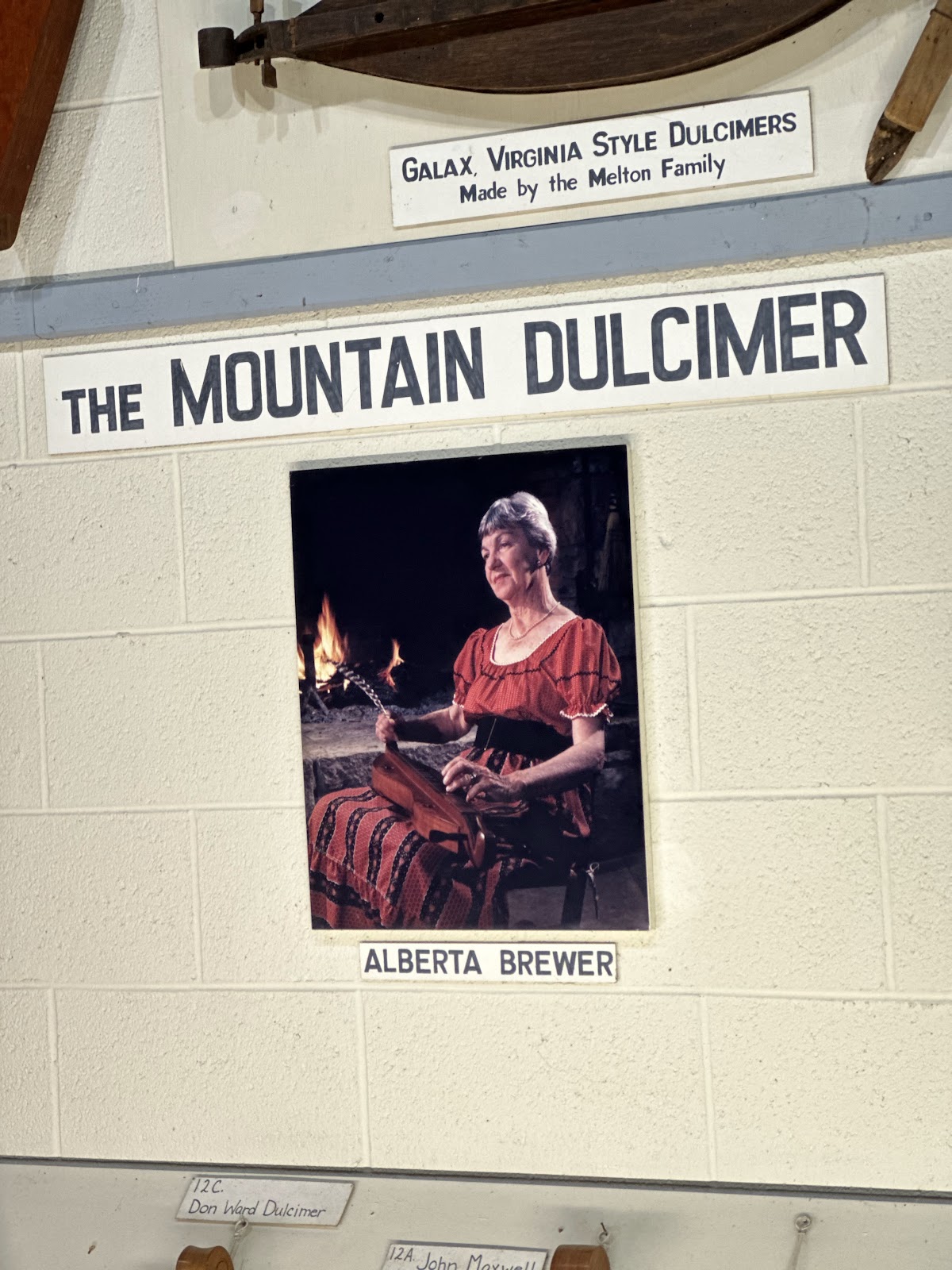
This experience shows a very simple way of live. It also bridges a realization that many old time traditions were developed and saved from generation to the next generation. I am focusing on a musical tradition using the dulcimer. There is a photograph of a Alberta Brewer playing her musical instrument by a fire where the flames move with the sounds of home made songs.
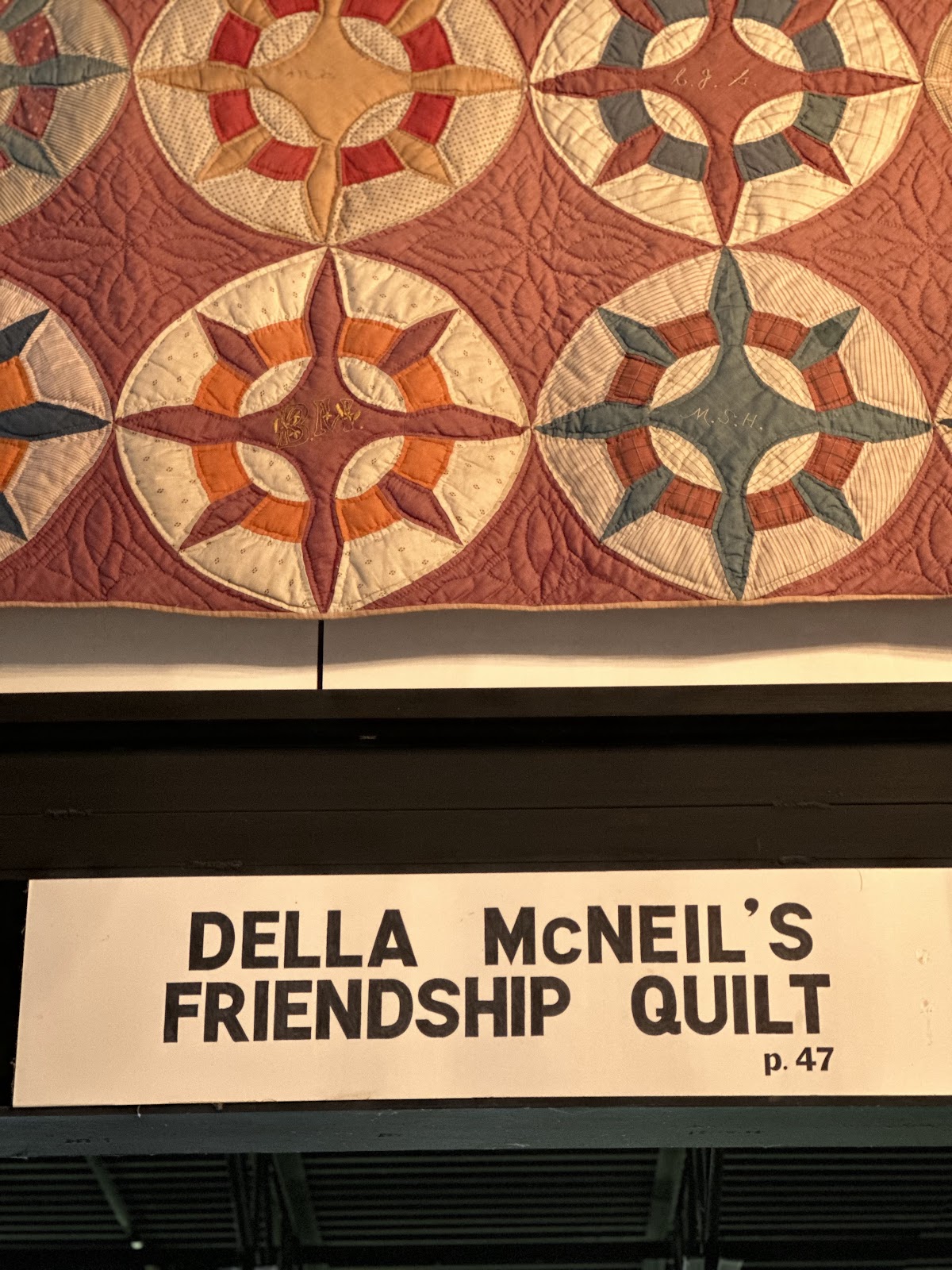
The Della McNeil's Friendship Quilt is a fine example of what women did in groups. It was a way to talk life out, raising children, food insecurity, and other daily life issues. Keep in mind that this is a time period that many families of the previous generations had many children, 10,12,18, or more children. Some of these children moved to different areas to start their own families. The McNeils were such a family. This family moves westward with the Ohio Company during the expansion of the Northwest Territory.This is a photo in the museum that shows a photo of the internationally known author of Roots, Mr. Alex Haley. I remember this mini series on TV in the 1970's.
This is a photo of the Tree of Life meaning that was past down orally in the community. Usually it was a single person's home that people would go to to catch up and learn meanings of the Tree of Life.
This is a lovely photo of Alberta Brewer. Imagine if you will, family stories that have been passed down, both good and bad stories, and set it to music of her own design.
Author at the entrance of Museum of Appalachia.
Tuesday, June 18, 2024
America 250
America 250
America 250 is a year long event that is planned for the whole year 2026. This year long celebration of America's history for the last 250 years will include many vantage points of individual and family history.
Cist family blog is a vantage point of history looking or added vantage points to be included. So this blog post is sharing with the readers to talk with cousins, and other family members to ask the questions that you are afraid to ask in order to possibly add your vantage point to add to America 250.
Recomendations:
1. Get a library card.
2. Talk with family members. Write it down.
3. Possible donation of historical items to museums.
4. Make a financial donation to America 250
You matter. You count. Get involved today. 2026 will be here soon.
Thank you readers for considering your involvement.
Andrew
Wednesday, June 12, 2024
Charles Cist letter to Mary Weiss- Philad. Aug 5, 1797
Monday, April 15, 2024
Wednesday, April 10, 2024
Total Solar Eclipse- Piatt Castle, West Liberty, Ohio 04/08/2024
Piatt Castle, West Liberty, Ohio was a great place to view the Total Solar Eclipse. There were outdoor educational classes about the different celestial events during the last one hundred years, a viewing telescope, special certified glasses to look at the eclipse, and a house tour. I purchased a T-shirt to commemorate the day at the castle.
Below are pictures of the eventful day at Piatt Castle.
There were many aspects that made today memorable. The fact that outdoor education is still taught brings a reminder of how individuals and families interacted with each other. There is a present day awareness of how many individuals and families still interact with each other whether they realize a connection of when people came over from Europe to the early British Colonies to start a new life.
The Cincinnati Observatory Society was also present at Piatt Castle. A special telescope with filters was available for the view public.
Friday, April 5, 2024
Army of the Cumberland by Henry M. Cist
Benjamin Rush Philadelphia house site
Friday, March 15, 2024
Nashville, TN Confederate Currency- Henry M. Cist/ Lewis Jacob Cist
This blog post is continuing to explore a possible connection with how early American currency was used to conduct transactional affairs both within its borders and internationally.
Are there red ink signatures that are signed on Confederate currency? If there are red ink signatures with the next generation of currency could this be a link to a hidden meaning and/or a secret story? This currency does not have magical powers. It does show that there is more historical research to conduct.
Why do I say this? As oral tradition goes in our family, I have noticed that there is a separation of information between the Henry M. Cist and Lewis Jacob Cist generation and the next generation of Henry's children. Edith Cist, a daughter of Henry M. Cist, married Charles Louis LaBoiteaux both families were from College Hill, Ohio.
Edith Cist did not transfer oral tradition about these confederate notes to future generation. Theses notes were compiled together, but the story behind the notes continues. Very little information about the Cist brothers involvement in Nashville, TN has been passed down in the family. The photos of Cist brothers are from a Nashville photo shop that shows there were there during the Civil War.
One way to learn more about what I am trying to convey is to look at the signatures of these notes. For example, John Snyder on the 20 dollar note is the from the same Snyder family from the Union Chaplin Snyder who provided spiritual guidance and healing for soldiers during the Civil War. A later Snyder generation, the well known mid-western artist William McKee Snyder who painted forest paintings showed us were meetings took place, Individuals and families have there own stories to tell about how they used this forest space that William McKee Snyder painted for his audience. Some forest spaces were used to have secret meeting places during the Underground Railroad, other forest spaces were uses for a gentleman to spend time courting a lovely Antebellum lady. others just wanted to experience the different full colors of Red Maples, or a bright yellow from birch leaves, or a person could leave instructions, money for others to pick up a later date. There is freedom with your interpretation based on individual and family experiences during this time period.
Furthermore, Henry M. Cist was the attorney for Donn Piatt. When Henry Cist and Lewis Jacob Cist came back for Nashville, TN they went to Donn Piatt's home in West Liberty, Ohio. There is a connection between lawyer client privilege between (Cist and Piatt) and why certain historical information was omitted.
This next sentence is purely a theory perceptive. Why did Henry M. Cist go to Rome, Italy with his wife. Cist died in Rome, Italy. What else is in Rome? The Vatican, other spiritual and historical places.
Continue to cross reference names, dates, and family stories to learn more about why the Cist brothers pasted down this framed confederate currency display. Why are these notes arraigned this way. I now I ask myself many questions, but it is a way to get individuals and organizations talking about Cist family matters.
Friday, March 8, 2024
Charles Cist Continental Currency- York-town, 11th April 1778
This example of Charles Cist currency dated 11th April 1778 is to show that this currency note was signed in red ink. Many of the other currency notes signed by other printers. were signed in black ink. There is a story to unfold here. Also, Benjamin Franklin invented a counterfeit measure by having leaves pressed together. This way each leaf can be judged as genuine and not fake.
Furthermore, my reacher has shown that this Cist note could be the only one left out of the notes that Cist had to redeem during the American Revolution. Cist was treasurer of the Continental Congress for a period of time.
- Signatures:
- Watermarks:
- Engravings:
- Denomination-specific elements: